Solar as an Asset: What Makes Your PV Project “Bankable”?
Solar Basics
2026 / 10 / 10 ⋅ 3 min read



A solar project is more than a set of panels installed in a field or on a rooftop. For commercial and utility-scale projects, it also represents a long-term investment. Developers need to assess how much electricity the system will generate, how that electricity will generate revenue or reduce costs, and whether those returns can support the project’s financing.
Large projects are often funded through a combination of the developer’s own capital and loans. Before lending, banks and other financiers carefully assess whether a project is likely to generate sufficient cash flow to repay its debt. A project is commonly described as “bankable” when its risks, expected performance, contracts, and financial assumptions are sufficiently credible for financing to be considered.
Module performance is an important part of this assessment. Energy generation forecasts rely on assumptions about initial output and how output may change over time. If a financial model assumes a particular degradation rate, this assumption affects projected energy yield—and, consequently the revenue or savings used in the project’s financial case. Clear, credible performance data helps technical advisers test whether those assumptions are reasonable. It does not determine the financing decision on its own, but it can make one part of the risk assessment more transparent.

Projected energy generation should be based on the site’s solar resource, system design, expected losses, operating conditions, and reasonable assumptions regarding module degradation. Independent technical reviews may challenge assumptions that are insufficiently substantiated or lack credible supporting evidence.
Datasheets describe product specifications, while independent testing and relevant field data can provide additional evidence about how equipment performs under defined conditions. The scope of each test matters: test results should be interpreted in relation to the failure mode, product configuration, and test programme they cover.
Reviewers may examine the scope and duration of the warranty, applicable exclusions, and the legal entity responsible for fulfilling the warranty obligations. A long warranty is not a substitute for assessing the manufacturer’s financial standing, service arrangements, and contractual terms.
Module quality is just one of several factors influencing a project’s bankability. Other important considerations include revenue arrangements, financing structure, construction and operation contracts, grid connection, permitting, insurance coverage, and the experience and track record of the project team. All these factors contribute to the project’s overall risk profile.
For module suppliers, the practical contribution is to provide clear and traceable documentation that enables project teams to evaluate product performance and relevant risks. Depending on the project and product, this documentation may include technical datasheets, degradation and warranty information, certification documents, and reliability-test results.
For example, Astronergy publishes product information and warranty details for its ASTRO module series. The ASTRO N7 Pro product documentation lists first-year power degradation of no more than 1% and annual degradation of no more than 0.35% for years two to thirty. These figures should be checked against the current product documentation and the module model specified for a particular project. They are inputs to a project assessment—not a guarantee of project-level energy yield or financing approval.
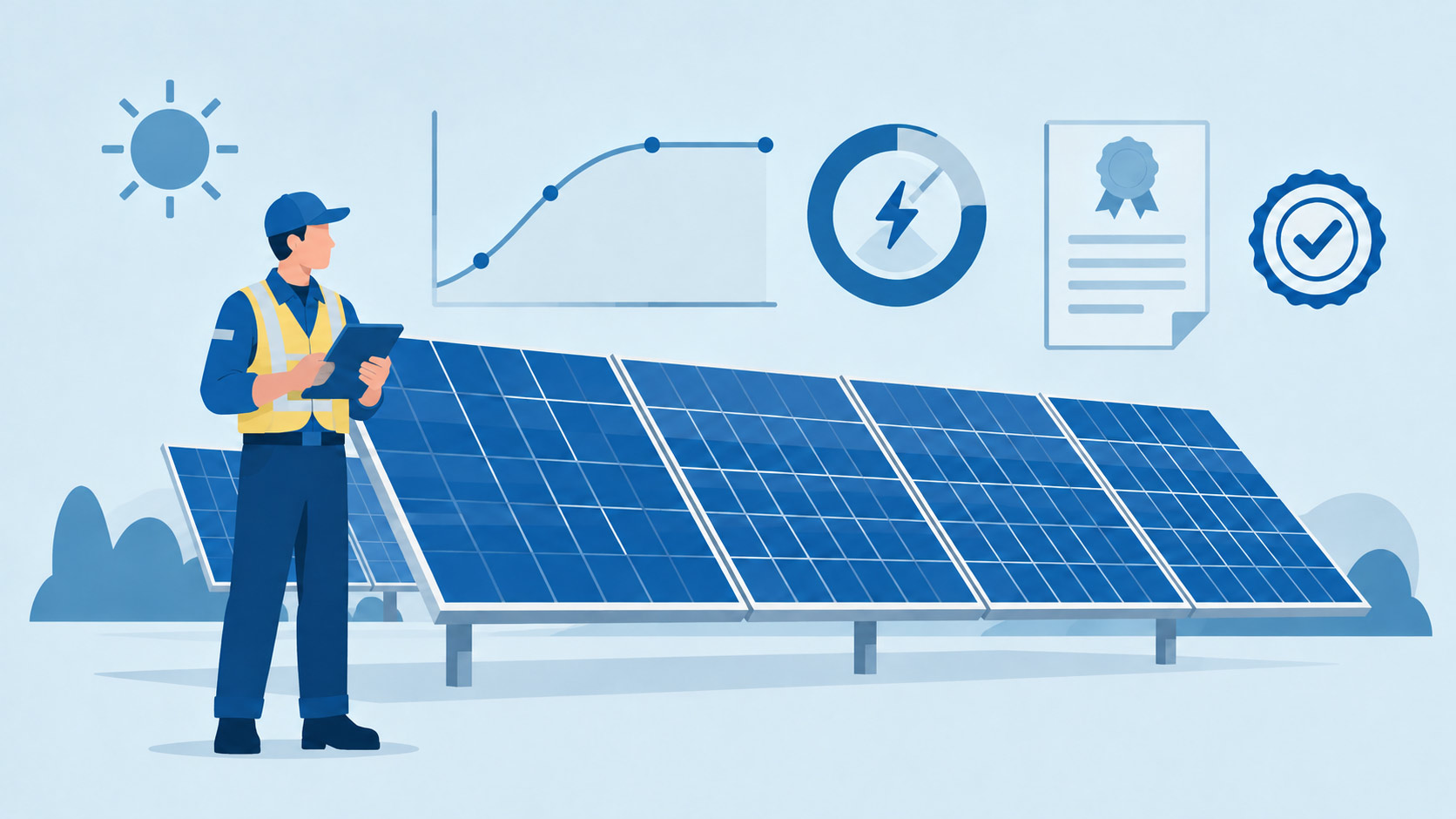
Bankability is built on credible evidence across the whole project. Reliable modules, transparent performance assumptions, appropriate warranties, and relevant independent test results all help project teams assess equipment-related risks. However, the final financing case also depends on factors such as the project’s cash flow, contracts, grid conditions, design, and the parties responsible for construction and operation.
When evaluating a PV project, developers should look beyond headline module wattage. They should consider how performance assumptions are substantiated, what the warranty actually covers, which independent test results are relevant, and how module selection fits the project’s operating conditions and long-term financial model.
 https://astronergy.com.au/wp-content/uploads/2026/11/Industry-Insights-10-Saudi-Arabias-Solar-Market-Is-Scaling-Up-While-Building-for-Flexibility.jpg
714
1269
marketing.astro
/wp-content/uploads/2024/07/Astronergy-LOGO-black.png
marketing.astro2026-11-23 13:19:152026-11-24 08:59:02Industry Insights #10: Saudi Arabia’s Solar Market Is Scaling Up, While Building for Flexibility
 https://astronergy.com.au/wp-content/uploads/2026/11/Industry-Insights-9-Australias-Rooftop-Solar-Boom-When-More-Generation-Is-No-Longer-the-Whole-Story.jpg
660
1268
marketing.astro
/wp-content/uploads/2024/07/Astronergy-LOGO-black.png
marketing.astro2026-10-22 13:09:492026-11-24 08:59:11Industry Insights #9: Australia’s Rooftop Solar Boom: When More Generation Is No Longer the Whole Story
 https://astronergy.com.au/wp-content/uploads/2026/11/The-Synergy-of-Solar-and-Storage-Key-Considerations-for-a-Future-Proof-System.jpg
680
1400
marketing.astro
/wp-content/uploads/2024/07/Astronergy-LOGO-black.png
marketing.astro2026-10-20 14:04:282026-11-24 08:59:22The Synergy of Solar and Storage: Key Considerations for a Future-Proof System
Astronergy
News
Expos
Sustainability
Technology Innovation
Smart Manufacturing
Quality Control
Download Center
FAQs & Support
Solar Project Cases
After-sales Service
*By clicking subscribe, I agree to Astronergy’s Privacy Policy and Terms of Use.


 Energyear Italia 2026
Scroll to top