Industry Insights #6: Malaysia’s Solar Transition – Understanding Solar ATAP, SuRIA Home and the Future of Residential PV
Industry Trends
2026 / 07 / 30 ⋅ 4 min read


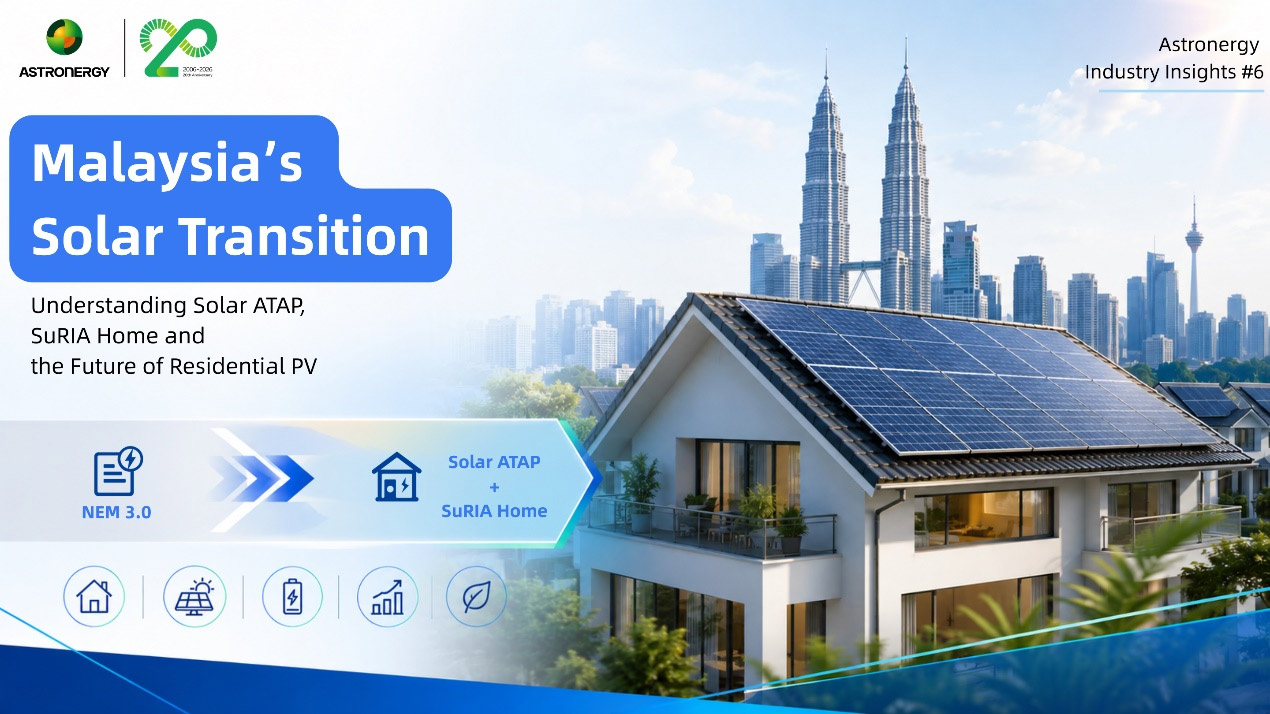
As global demand for sustainable energy continues to grow, Malaysia’s residential solar market is entering a new phase with the transition from NEM 3.0 to Solar ATAP, supported by the newly introduced SuRIA Home incentive program.
Together, these initiatives are reshaping Malaysia’s rooftop solar landscape — lowering entry barriers for homeowners while shifting the focus from maximizing electricity exports to improving self-consumption and long-term energy savings.
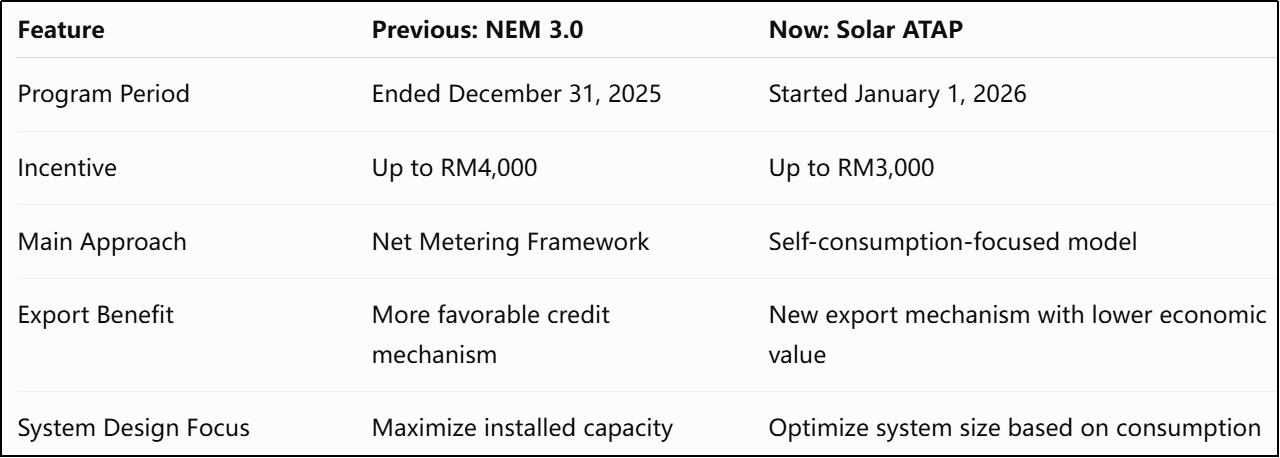
Malaysia’s residential solar market has moved from the previous Net Energy Metering (NEM 3.0) framework to Solar ATAP (Accelerated Transition Action Programme). This transition reflects Malaysia’s broader objective of encouraging greater self-consumption while improving the long-term sustainability of distributed energy integration.
The biggest change is how surplus solar electricity is treated. Under NEM 3.0, homeowners benefited from a stronger net metering mechanism, where excess electricity could be credited against future consumption. Under Solar ATAP, the emphasis shifts toward using solar energy directly when it is generated.
1. Self-Consumption Becomes the Priority
Unlike NEM 3.0, where exporting excess electricity provided significant value, Solar ATAP encourages households to consume more of their own solar generation. Under Solar ATAP, every kilowatt-hour consumed directly on-site generally delivers greater economic value than electricity exported to the grid, making self-consumption the primary driver of system returns.
2. System Design Needs to Match Real Consumption
Homeowners should consider their daily electricity usage patterns, especially daytime consumption, when planning a solar system.
3. Greater Opportunity for Smart Energy Management
Energy monitoring, load shifting, and battery storage can help households increase solar utilization and maximize savings.
The SuRIA Home program is a major government initiative designed to accelerate residential solar adoption in Malaysia. By providing upfront financial incentives, the program helps reduce the initial investment barrier and encourages more households to embrace clean energy.
Key highlights include:
In the Solar ATAP era, the traditional approach of “installing as many panels as possible” is no longer the most effective strategy.
Rather than maximizing installed capacity, homeowners should prioritize maximizing the amount of solar electricity consumed on-site.
1. Right-Size Your System
Design the solar system according to actual electricity consumption instead of simply maximizing rooftop capacity. A properly sized system can achieve a higher self-consumption ratio and better financial returns.
2. Shift Electricity Usage to Daytime
Use energy-intensive appliances such as washing machines, dishwashers, water heaters, and EV chargers during peak solar generation hours (typically 9 AM–4 PM) to directly utilize solar power.
3. Consider Battery Energy Storage Systems (BESS)
Battery storage allows excess solar energy generated during the day to be used later, increasing self-consumption and reducing dependence on grid electricity during evening hours.
4. Monitor and Optimize Energy Usage
Smart monitoring systems help homeowners understand energy patterns and continuously improve solar utilization.
As Solar ATAP shifts Malaysia’s residential solar market toward higher self-consumption, it will drive higher expectations for PV module performance. Solutions that deliver stronger energy yield, long-term reliability, and consistent performance in tropical climates will become increasingly valuable under the Solar ATAP framework.
Astronergy’s n-type TOPCon modules are designed to support these priorities, delivering stable performance under Malaysia’s hot and humid climate conditions.
Malaysia’s residential solar market is entering a new stage, where success will depend not only on wider adoption, but also on smarter system design and long-term performance. As policies continue to encourage greater self-consumption, homeowners, installers, and technology providers will all play an important role in maximizing the value of rooftop solar. With the combined support of SuRIA Home and Solar ATAP, Malaysia’s residential solar market is entering a new stage of growth.
 https://astronergy.com.au/wp-content/uploads/2026/09/The-Rise-of-Virtual-Power-Plants-How-Solar-and-Batteries-Can-Create-More-Value.jpg
941
1672
marketing.astro
/wp-content/uploads/2024/07/Astronergy-LOGO-black.png
marketing.astro2026-09-20 12:36:352026-09-23 18:53:43The Rise of Virtual Power Plants: How Solar and Batteries Can Create More Value
https://astronergy.com.au/wp-content/uploads/2026/09/The-Rise-of-Virtual-Power-Plants-How-Solar-and-Batteries-Can-Create-More-Value.jpg
941
1672
marketing.astro
/wp-content/uploads/2024/07/Astronergy-LOGO-black.png
marketing.astro2026-09-20 12:36:352026-09-23 18:53:43The Rise of Virtual Power Plants: How Solar and Batteries Can Create More Value https://astronergy.com.au/wp-content/uploads/2026/09/The-Digital-Solar-Farm-How-IoT-and-AI-Are-Optimizing-Large-Scale-Operations.jpg
768
1376
marketing.astro
/wp-content/uploads/2024/07/Astronergy-LOGO-black.png
marketing.astro2026-09-10 10:19:212026-09-23 18:53:44The Digital Solar Farm: How IoT and AI Are Optimizing Large-Scale Operations
https://astronergy.com.au/wp-content/uploads/2026/09/The-Digital-Solar-Farm-How-IoT-and-AI-Are-Optimizing-Large-Scale-Operations.jpg
768
1376
marketing.astro
/wp-content/uploads/2024/07/Astronergy-LOGO-black.png
marketing.astro2026-09-10 10:19:212026-09-23 18:53:44The Digital Solar Farm: How IoT and AI Are Optimizing Large-Scale Operations https://astronergy.com.au/wp-content/uploads/2026/09/Future-Proofing-a-Landmark-Hotel-A-Comprehensive-Energy-Upgrade-with-Solar.jpg
1152
2048
marketing.astro
/wp-content/uploads/2024/07/Astronergy-LOGO-black.png
marketing.astro2026-08-20 11:49:322026-09-03 17:23:48Future-Proofing a Landmark Hotel: A Comprehensive Energy Upgrade with Solar
https://astronergy.com.au/wp-content/uploads/2026/09/Future-Proofing-a-Landmark-Hotel-A-Comprehensive-Energy-Upgrade-with-Solar.jpg
1152
2048
marketing.astro
/wp-content/uploads/2024/07/Astronergy-LOGO-black.png
marketing.astro2026-08-20 11:49:322026-09-03 17:23:48Future-Proofing a Landmark Hotel: A Comprehensive Energy Upgrade with SolarAstronergy
News
Expos
Sustainability
Technology Innovation
Smart Manufacturing
Quality Control
Download Center
FAQs & Support
Solar Project Cases
After-sales Service
*By clicking subscribe, I agree to Astronergy’s Privacy Policy and Terms of Use.


 Portugal Douro 150MW Solar Park
Scroll to top
Portugal Douro 150MW Solar Park
Scroll to top